The Role of Self-Esteem and Self-Perceived Aging in Predicting Physical Therapy Engagement
DOI:
https://doi.org/10.61838/kman.longevity.2.1.5Keywords:
Physical therapy engagement, self-esteem, self-perceived aging, psychological factorsAbstract
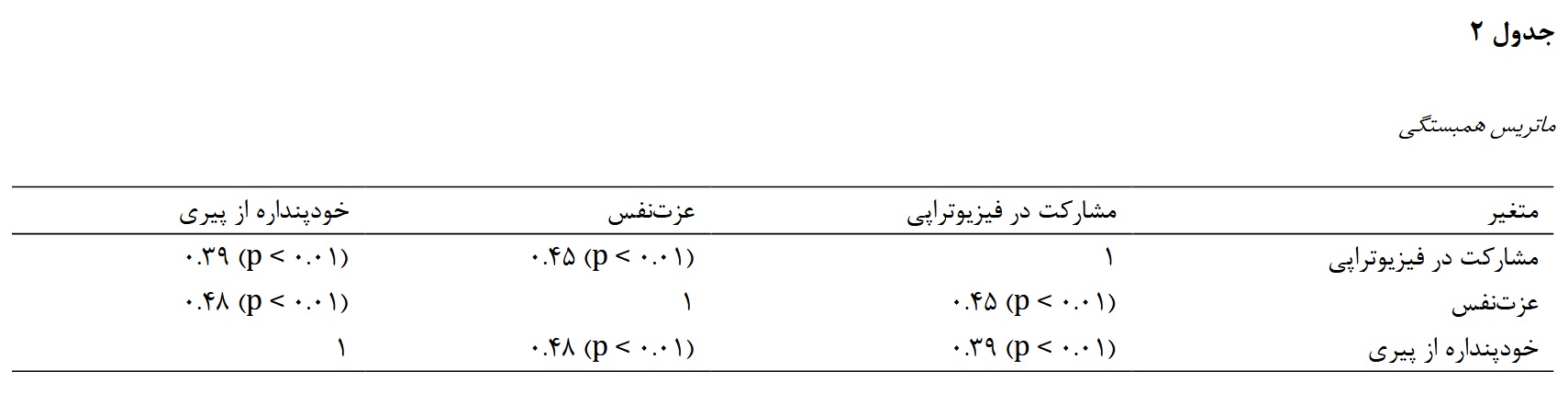
This study aims to explore the relationship between self-esteem, self-perceived aging, and engagement in physical therapy among adults in Tehran. The study investigates how these psychological factors predict participation in physical therapy programs. A cross-sectional design was employed with 160 participants randomly selected from Tehran. Data were collected using the Physical Therapy Engagement Questionnaire, the Rosenberg Self-Esteem Scale, and the Aging Perception Questionnaire. Pearson correlation and linear regression analyses were conducted using SPSS-27 to assess the relationships between variables. The results showed significant positive correlations between self-esteem and physical therapy engagement (r = 0.45, p < 0.01) and between self-perceived aging and physical therapy engagement (r = 0.39, p < 0.01). Multiple regression analysis indicated that both self-esteem (B = 0.53, p < 0.01) and self-perceived aging (B = 0.41, p < 0.01) are significant predictors of physical therapy engagement. The study concludes that enhancing self-esteem and fostering positive perceptions of aging can significantly increase engagement in physical therapy. These findings highlight the importance of psychological interventions in promoting physical health behaviors.
Downloads
Publication Timeline
- Submitted
- Revised
- Accepted